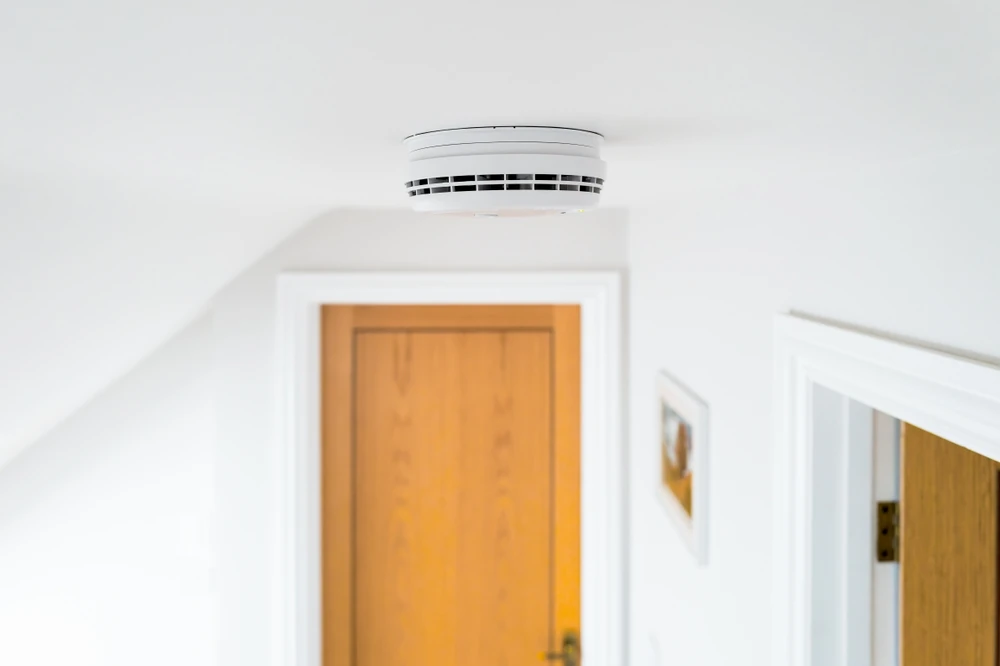
Knowing exactly where to install smoke alarms in a home is just as important as having them in the first place. At Hudson Electrical (Level Electrical West Gosford), many properties are found with alarms positioned incorrectly, reducing their ability to detect smoke early or provide a timely warning. This guide outlines which rooms require smoke alarms, which areas are often overlooked and how correct ceiling and wall placement improves performance, with guidance aligned to Australian requirements and the expertise of an electrician on the Central Coast.
The key locations for smoke alarms include bedrooms, hallways, living areas and escape paths, along with areas to avoid. Practical placement considerations are also covered for single-level and multi-storey homes, so installation decisions reflect real layouts.
Correct smoke alarm placement is as important as having alarms installed in the first place. A quality smoke alarm in the wrong position can fail to detect smoke in time, while a well-placed alarm can provide crucial extra minutes to escape and call emergency services.
Smoke moves differently in each part of a home. Understanding how it travels and where it can be trapped or slowed helps explain why the Australian standard AS 3786 and NSW regulations specify minimum locations and strong recommendations for others. Strategic placement supports both early warning and reliable operation.
Fire and toxic smoke spread quickly, often in less than three minutes from ignition to a life-threatening environment. The primary goal of smoke alarm placement is to detect smoke as close to the point of origin as possible without causing constant false alarms.
Alarms in sleeping areas and hallways are positioned to alert occupants before smoke fills bedrooms. At night, the sense of smell is greatly reduced, so an alarm must sound early enough for people to wake up, orient themselves and exit safely. A poorly located alarm, one at the far end of a long hallway or behind a closed door, might not activate until smoke levels are already dangerously high.
Locating alarms on or near the ceiling exploits the natural pattern of hot smoke rising then spreading horizontally. An alarm too low on a wall or behind a beam or bulkhead may miss the first critical plume of smoke and activate late.
Poor placement can create pockets where smoke does not reach the sensor quickly. These “dead air” spaces usually occur in corners where the wall meets the ceiling near the apex of a cathedral ceiling or too close to fans or air conditioning outlets.
Positioning alarms at least 300 mm away from corners and light fittings allows smoke to flow freely across the sensing chamber. Similarly, alarms should be kept away from strong draughts from windows, exhaust fans or air conditioning, which can blow smoke away from the detector and delay activation.
Placement also affects how often an alarm activates when there is no fire. Frequent nuisance alarms from cooking steam or bathroom humidity encourage occupants to disable or remove alarms, which defeats their purpose.
Keeping alarms at least a few metres away from kitchens and bathrooms while still covering escape paths helps maintain sensitivity to real fire conditions without constant false triggering. In areas near kitchens heat alarms or carefully positioned photoelectric smoke alarms can provide protection with fewer nuisance activations.
Smoke alarms must be placed where they will detect smoke quickly and wake people while there is still time to escape. Their locations are not random or optional. Australian regulations set minimum requirements and best practice goes further to cover all sleeping areas and escape paths.
Correct positioning is especially important in multi‑storey homes and properties with separate living zones or converted garages. Every level and every bedroom area needs reliable coverage so that no one sleeps behind a closed door without effective early warning.
In most homes, the legal minimum is at least one working smoke alarm on every level of the home. This applies even to levels that only contain a garage or storage room because fires commonly start in these areas.
On storeys with bedrooms, smoke alarms must be installed in hallways or corridors that connect the sleeping rooms to the rest of the home. Where bedrooms open directly onto a living area with no hallway, the alarm should be located in the area just outside the bedrooms so that it still protects the sleeping occupants.
Newer properties and homes undergoing renovation are generally required to have hard‑wired interconnected alarms. When one alarm activates, they all sound, providing a much higher level of safety, particularly in larger homes.
Fire services strongly recommend an alarm inside every bedroom, particularly where people sleep with doors closed or use heaters, electric blankets or charging devices. An alarm outside the room might not be heard soon enough if the door is shut and the fire starts in the bedroom itself.
At a minimum, an alarm should be installed:
In homes with separate sleeping zones, such as a parent's retreat at one end and children’s bedrooms at the other, each zone needs its own nearby alarm to ensure even coverage.
Living and family rooms where heaters, fireplaces or entertainment equipment are used are common fire sources. Installing alarms in or adjacent to these rooms improves early detection, particularly in open‑plan layouts where smoke can travel unpredictably.
Every storey must have an alarm on the normal path people would take to exit the building. In a two‑storey home, this usually means at the top of the stairwell and sometimes at the bottom too, so that the sleeping level and the primary escape route are monitored.
Garages that are attached to the home are a high‑risk area due to vehicles, fuel and tools. Where possible, an alarm should be fitted in the garage or just inside the internal door leading from the garage into the house. For kitchens, a smoke alarm should not be directly over cooking appliances to avoid false alarms. A heat alarm in the kitchen with a smoke alarm nearby in the adjoining area is often the most practical solution.
Correct placement of smoke alarms is just as important as choosing the right type of alarm. Suitable locations allow early detection of smoke and give occupants maximum time to escape. Poor placement can cause nuisance activations or delay alarm response, reducing safety.
Smoke alarms should not be installed too close to corners or obstructions. A clearance of at least 300 mm from any wall or light fitting is recommended on ceilings. This avoids dead air spaces where smoke may not reach the alarm in time.
In kitchens, smoke alarms should be at least 3 m horizontally from ovens, cooktops or high-use appliances to reduce false alarms due to normal cooking. Where this distance is not available, a heat alarm rather than a smoke alarm in the kitchen area may be more suitable, with smoke alarms positioned just outside the kitchen.
Smoke alarms should not be installed:
Alarms should also be kept away from areas with heavy dust. It can contaminate the sensing chamber and lead to unreliable operation.
Correct smoke alarm placement changes depending on whether the alarm is in a bedroom, a connecting hallway or on different levels of a multi-storey home. Each location has a different fire risk pattern and people need to be alerted from different parts of the house. Positioning alarms strategically in these areas is essential for early warning and safe escape.
Bedrooms are critical locations because most fatal home fires start or are discovered at night when people are asleep. A sleeping person may not wake to smell smoke, so an alarm inside the bedroom is vital.
An alarm should be installed on the ceiling in each bedroom at least 300 mm away from any wall or corner so smoke can reach the sensor quickly. If the ceiling is pitched, the alarm should be mounted near the highest point but not directly at the apex, where pockets of dead air can form.
For rooms with fans, air conditioning outlets or high-level vents, the alarm should be positioned so airflow does not blow smoke away from the detector. Installing the alarm at least 400 mm from air conditioning vents and away from the direct path of ceiling fans helps avoid delayed activation and false security.
Hallways act as escape routes and smoke highways. Correct placement in these spaces ensures alarms detect smoke moving from living areas or kitchens towards bedrooms.
In a single-storey home with bedrooms grouped off a hallway, a smoke alarm should be mounted on the ceiling in the hallway close to the bedroom doors. The alarm should be central in the hallway, not near a doorway or window where draughts may divert smoke. For a long hallway of more than about 10 metres, additional alarms help maintain coverage so no point in the hall is too far from a detector.
In multi-storey homes alarms must provide coverage on every level and along the main vertical escape route. Smoke rises quickly, so alarms need to be located where smoke naturally travels.
Each storey, including basements and converted attics, should have at least one smoke alarm on the ceiling. The alarm should be placed near the centre of circulation areas, such as near the top of stairs or in the main hallway, so smoke from any room on that level reaches it promptly.
Stairwells are especially important because they are both escape paths and chimneys for hot smoke. An alarm should be installed at the top of each stair flight on the ceiling above or just adjacent to the stair opening. For tall multi-level voids, alarms may be required on more than one level so thick smoke is detected before it fills the uppermost space. Linked alarms are strongly recommended, so an alarm on any level triggers audible alerts throughout the home.
Smoke alarm placement is not a “set and forget” decision. Over time, regulations change, floor plans evolve and alarms age, all of which can leave a home underprotected without anyone realising. Regularly reviewing where alarms are installed helps ensure every sleeping area and potential fire source is still adequately covered.
In NSW, smoke alarm laws specify at least one alarm per level, with additional alarms recommended inside and immediately outside bedrooms and in key circulation areas. Any time a home’s layout, use or condition changes, the current placement should be checked against these requirements and best practice guidelines.
Any alteration that changes how people move through a home or where they sleep should trigger a review. This includes extensions, garage conversions, new internal walls or doors and major kitchen or bathroom reconfigurations.
A new bedroom, a study used as a bedroom or a secondary living area may require an additional alarm inside or just outside the room. A relocated kitchen may need a nearby alarm moved so it is close enough to detect smoke quickly, yet far enough to reduce nuisance alarms from normal cooking. New hallways or closed‑off areas can create dead spots for smoke travel, so existing hallway alarms may need to be repositioned for clear coverage of escape paths.
Even without building work, smoke alarm placement can become outdated as a family’s needs change. The creation of a nursery, guest room or teenage retreat in a former study or rumpus room means a sleeping area is now in use and may not be properly covered by an existing alarm.
Similarly, using a garage, shed or outbuilding as a hobby space or home office with electrical equipment increases fire risk. These areas may need new alarms or an upgrade from battery-only to interconnected units so a fire in a separate space is heard throughout the main dwelling. Any change that results in people sleeping further from existing alarms, especially behind additional closed doors, should trigger a placement review.
Smoke alarms have a typical service life of 10 years from the date of manufacture. When alarms reach this age or begin to fault, they should not simply be replaced in the same spot without question. Current standards and guidelines may differ from those that applied when the original alarm was installed.
Upgrading from older ionisation models to photoelectric or from standalone to interconnected alarms is an ideal time to reassess the entire layout. Ceiling joists, light fittings or air‑conditioning vents may have changed over the years, affecting ideal mounting points. Each alarm should be checked for correct distance from corners, walls, fans and bathrooms to reduce false alarms while still providing early warning.
Correctly positioned, interconnected and compliant smoke alarms remain one of the most effective life safety measures in any home. Proper coverage across bedrooms, hallways, living areas and every level ensures early detection, while careful placement away from kitchens, bathrooms and airflow sources reduces nuisance activations and improves reliability. Alignment with standards and current NSW requirements ensures systems perform as intended during an emergency. Accurate smoke alarm placement is a technical decision that should reflect both regulations and the specific layout of the property.