Outdoor lighting does far more than improve how a property looks at night. It affects how safely people move around paths, steps, driveways and entry points, how secure a home feels after dark, and how reliably the electrical system performs in exposed conditions. At Hudson Electrical (Level Electrical West Gosford), outdoor lighting issues are often found that appear minor at first but can create real safety risks, from moisture getting into fittings and damaged cabling to poor placement that leaves glare, dark spots or trip hazards around the property.
This article explains the most common outdoor lighting risks around Central Coast homes and businesses, the warning signs to look for, and what safe installation and maintenance should involve. It covers exposed or damaged cabling, incorrect fitting selection, poor DIY installations, visibility issues, and the fire or shock risks linked to ageing or non-compliant equipment, so property owners can make better decisions about repairs, upgrades, and new lighting.
Outdoor lighting is often installed for security, access and appearance, but when it is not designed or maintained safely, it can create serious electrical and physical hazards. Electric shock, fire risk, glare, poor visibility and trip hazards can all result from lighting that is poorly located, incorrectly installed or no longer suited to the conditions around it.
Safe outdoor lighting is especially important in coastal and high-moisture areas, where fittings and cables are exposed to rain, salt air, irrigation, condensation and physical wear. A safe system is one that uses correctly rated equipment, is installed to Australian standards, and is checked often enough for faults to be picked up before they cause harm.
Water, dirt and electricity are a high-risk combination. Outdoor fittings, joints and cables are regularly exposed to rain, condensation, humidity and garden watering. If moisture reaches live electrical parts, the result can range from nuisance tripping to electric shock.
Fire risk is another concern. Overloaded circuits, loose connections, poor-quality drivers or transformers, and damaged fittings can overheat over time. A small arc in a junction box, wall cavity or fitting can ignite nearby material, especially around timber structures, dry leaves or garden mulch.
Key safety measures include:
Even low-voltage garden lighting can still be hazardous if the transformer or driver on the 240V side is damaged, incorrectly installed or poorly protected.
Lighting that is too dim, too harsh or badly positioned can increase the chance of accidents rather than reduce it. Path lights that cause strong glare can make it harder to judge edges, steps and changes in level. At the same time, dark patches around stairs, driveways, garden paths and entries can make obstacles difficult to see.
Exposed or shallow cabling is another common hazard. Lawnmowers, whipper snippers, pets, foot traffic and garden work can all damage poorly protected cables. Once damaged, they may become a shock risk, a fault risk or a physical trip hazard. Sharp-edged fittings or spikes placed too close to walkways can also create avoidable injury risks.
A safe outdoor lighting system also supports security. Reliable sensor lighting improves visibility and can help deter intruders, while faulty lights, poor placement or fittings that fail in wet weather reduce that benefit.
Poorly designed lighting can also create nuisance issues. Excessively bright fittings or poorly aimed floodlights may spill into neighbouring properties, reduce comfort, and potentially lead to complaints. Better placement, shielding and more suitable colour temperatures can improve security and visibility without unnecessary glare or wasted energy.
Compliance matters as well. If an incident such as a fire, shock or injury is linked to DIY or non-compliant electrical work, it can create liability and insurance issues. Using compliant equipment and licensed installation gives a safer and more defensible outcome.
Outdoor lighting is exposed to rain, sun, wind, moisture and accidental impact, so any weakness in design, installation or maintenance can quickly turn into a safety issue. Many problems begin as small annoyances, such as flickering lights, moisture in fittings or occasional tripping, then develop into more serious electrical faults if left unaddressed.
Understanding the most common causes helps property owners spot issues earlier and reduce the risk of lighting failure, electric shock or fire.
Incorrect installation is one of the leading causes of outdoor lighting hazards. Common problems include fittings that are not rated for outdoor use, loose or poorly terminated connections, incorrect cable selection and wiring run through unsuitable locations.
DIY work often lacks the protection and sealing needed for exposed environments. Typical issues include:
These problems can lead to hot joints, arcing, moisture ingress and exposed live parts. Fixed outdoor wiring should comply with Australian requirements and be carried out by a licensed electrician so cable sizing, protection, earthing and installation methods are correct.
Moisture is one of the biggest threats to outdoor lighting. If fittings are not sealed properly or are simply not suitable for the location, water can enter through cable entries, cracked housings, degraded seals or broken lenses. That can lead to corrosion, short circuits, insulation breakdown and repeated tripping.
IP ratings matter because they indicate how well a fitting resists dust and moisture. The correct rating depends on where the fitting is installed and what it will be exposed to, whether that is rain, irrigation, salt air or occasional pooling water. UV exposure can also degrade seals and plastic housings over time, making fittings less resistant to moisture even if they were suitable when first installed.
Outdoor cabling is vulnerable to gardening tools, pets, vehicles, foot traffic and soil movement. Common issues include extension leads being used as permanent wiring, cables laid across lawns or paths, and cables buried too shallowly or without enough protection.
Any cut, crush point or damaged sheath can expose conductors or cause intermittent faults that are difficult to trace. Low-voltage systems can still present fire or fault risks when overloaded or shorted, while damaged mains cabling can cause serious shock or fatal injury.
Lighting fixtures are also vulnerable to physical impact. Bollards, spike lights, driveway lights and wall lights near access areas can be knocked loose, cracked or shifted out of position, which can affect both their weather resistance and their safety.
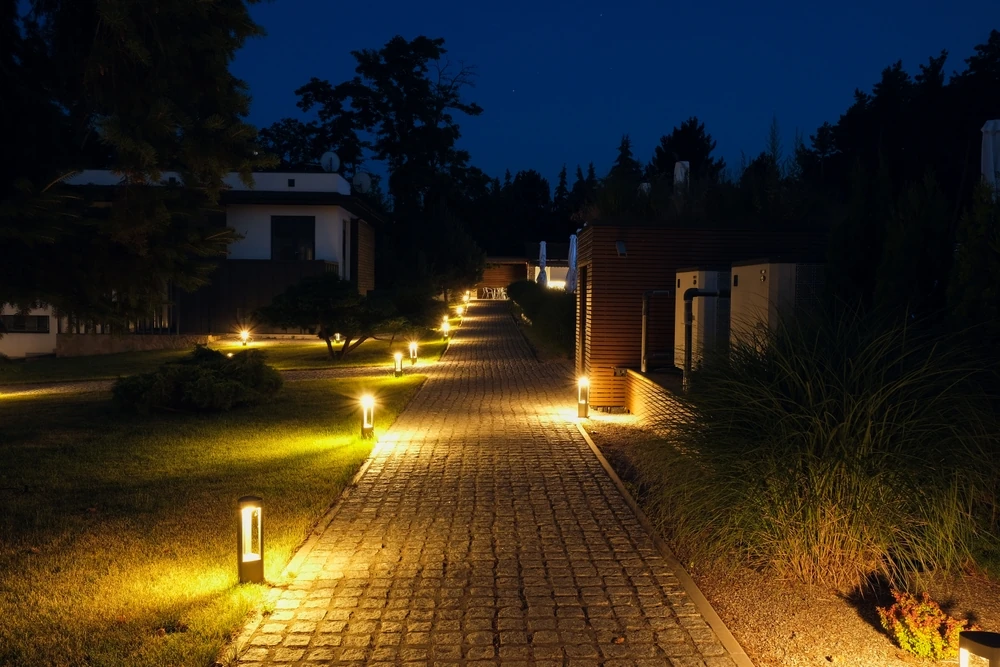
Water and weather exposure are among the most common causes of outdoor electrical failure. In coastal and high-humidity areas such as the Central Coast, fittings are exposed to moisture almost constantly, whether from rain, condensation, irrigation, salt air or damp ground conditions.
Understanding how these conditions affect fittings, seals, cables and connections is essential when choosing suitable outdoor lighting and identifying faults before they become dangerous.
Outdoor lights and accessories should have an IP rating that reflects how well they resist dust and water. The second digit is especially important because it relates to water resistance. Different locations will call for different levels of protection depending on whether the fitting is under cover, in open weather, near irrigation, or close to areas where water may pool.
For example, fittings exposed to direct rain or regular overspray often need a higher level of protection than fittings installed in a more sheltered position. Low-level lights in garden beds, near lawns, around paths or close to pool areas usually need more than basic splash resistance.
One common mistake is using equipment intended for indoors in partially protected outdoor spaces. It may appear fine at first, but over time moisture can still find its way into the fitting and create problems inside the housing or surrounding structure.
Severe weather can expose weaknesses in any outdoor installation. Wind-driven rain can force water into cable entries and junction boxes that would normally remain dry. Flooding can submerge low-level fittings or underground connections that were never designed for immersion.
In coastal suburbs, salt in the air speeds up corrosion of screws, brackets, lamp holders and metal housings. Even materials that perform reasonably well in other areas may deteriorate more quickly near the coast if they are not selected carefully. Once corrosion begins, it often creates new paths for water ingress and reduces the long-term safety of the installation.
Poor wiring and incorrect installation are among the main reasons outdoor lighting becomes unsafe. Because many cables and joins are hidden, problems may only show up after rain, a fault, or years of gradual deterioration.
The most serious risks usually involve moisture reaching live parts, unsuitable cable use, overloaded circuits, missing or ineffective protection, and poorly made joints.
One of the most serious mistakes is using equipment designed for indoor conditions in exposed outdoor areas. Standard indoor flex, indoor junction boxes and unsuitable fittings are not built for UV exposure, moisture, temperature swings or soil movement.
Over time, this can lead to:
Outdoor installations need cable and fittings that are specifically suited to outdoor conditions and appropriate for the exact location where they are used.
Unsafe joins are another frequent problem. Twisted wires covered in tape, buried plug-and-lead connections, or makeshift joints hidden under mulch or paving are highly unreliable in outdoor environments.
These shortcuts can lead to arcing, buzzing, intermittent faults and tripping. In wet conditions, they may also energise metalwork or surrounding ground. Outdoor joints should be enclosed, correctly terminated, accessible for inspection where required, and protected from moisture.
Running several outdoor lights from indoor power boards or extension leads left on the ground is also unsafe. Permanent or semi-permanent outdoor lighting should be treated as a proper fixed electrical installation, not as a temporary extension of indoor wiring.
Many outdoor lights have metal bodies, brackets or posts. If these are not protected properly and a fault occurs, the fitting itself may become dangerous to touch, particularly in wet conditions.
Other common problems include loose earth connections, corroded terminals, overloaded circuits and too many extra fittings added to an existing circuit without checking capacity. Warning signs may include warm switch plates, dimming when other lights switch on, or circuit breakers tripping without an obvious cause.
Outdoor lighting circuits should have suitable circuit protection and safety switch protection. If a safety switch is absent, does not appear to be functioning properly, or trips repeatedly under normal use, the installation needs professional assessment.
Unsafe outdoor lighting is not always immediately obvious. Small signs often point to larger electrical or installation problems developing in the background. Recognising these signs early can reduce the chance of shocks, loss of lighting, or fire risk.
Cracked housings, broken lenses, loose fittings and discoloured components are all signs that an outdoor light may no longer be safe. UV exposure, ageing, storms and impact from garden tools can all damage fittings over time. Once the housing is compromised, water, dirt and insects can enter and reach internal electrical parts.
Cables should also be checked visually. Cuts, flattening, exposed insulation, makeshift tape repairs or loose sections running through gardens or along fences all point to a need for professional attention.
Outdoor lights should keep live parts protected from moisture. Water pooling inside a fitting, ongoing condensation, staining, rust, or visible corrosion around screws and cable entry points all suggest the seals or housing may have failed.
If safety switches trip during or after rain, moisture ingress somewhere in the circuit is a likely cause. That sort of fault should not be ignored, even if the lights start working again once conditions dry out.
Flickering lights, motion sensors that behave erratically, lights that dim unexpectedly, buzzing noises, burning smells or switchboard tripping when outdoor lights are used all suggest the system may be unsafe.
These problems may be caused by water ingress, loose connections, faulty drivers or transformers, overloaded circuits, or cable damage. They should be treated as warning signs rather than minor inconveniences.
Outdoor lighting safety starts with better equipment selection, proper layout and regular maintenance. The goal is not just to keep the lights working, but to make sure they remain safe in changing weather and everyday use.
A safer setup usually includes fittings suited to the environment, well-planned cable routes, protection against moisture and impact, and circuits that are not overloaded.
The correct fitting depends on where it will be installed and what it will be exposed to. Coastal conditions, irrigation overspray, open weather, pool areas, high UV exposure and physical traffic all affect what type of fitting is suitable.
Using robust, properly rated fittings often reduces maintenance problems and extends service life, especially in exposed areas where cheaper products can deteriorate quickly.
Lighting should improve visibility without creating glare. Paths, stairs, driveways, entrances and changes in level should be lit clearly enough to support safe movement, while floodlights and feature lighting should be aimed carefully to avoid dark contrast, harsh shadows and nuisance spill.
Better placement can also reduce the chance of fittings being knocked, damaged or exposed to unnecessary wear.
Regular checks help identify cracked fittings, loose mounts, damaged cables, corrosion and signs of moisture before they become more serious. Lenses should be cleaned carefully, fittings should remain secure, and damaged equipment should be replaced promptly rather than patched temporarily.
Even where no obvious issue is visible, older outdoor lighting can benefit from inspection if it has been exposed to years of coastal weather, garden growth or changes to the property layout.
Outdoor lighting should improve safety, visibility and security, not introduce electrical risks around the property. Achieving that means more than simply choosing attractive fittings. It depends on using suitable equipment, matching the installation to the environment, protecting circuits properly, and dealing with wear, moisture and damage before they lead to faults.
For homes and businesses on the Central Coast, outdoor lighting is exposed to conditions that can shorten the life of poor-quality or incorrectly installed systems. A well-planned and properly maintained installation is more reliable, safer to use, and better able to handle real-world weather and everyday wear. Where there is any uncertainty about the condition of an existing setup or the requirements for new lighting, advice from a licensed electrician is the safest way forward.