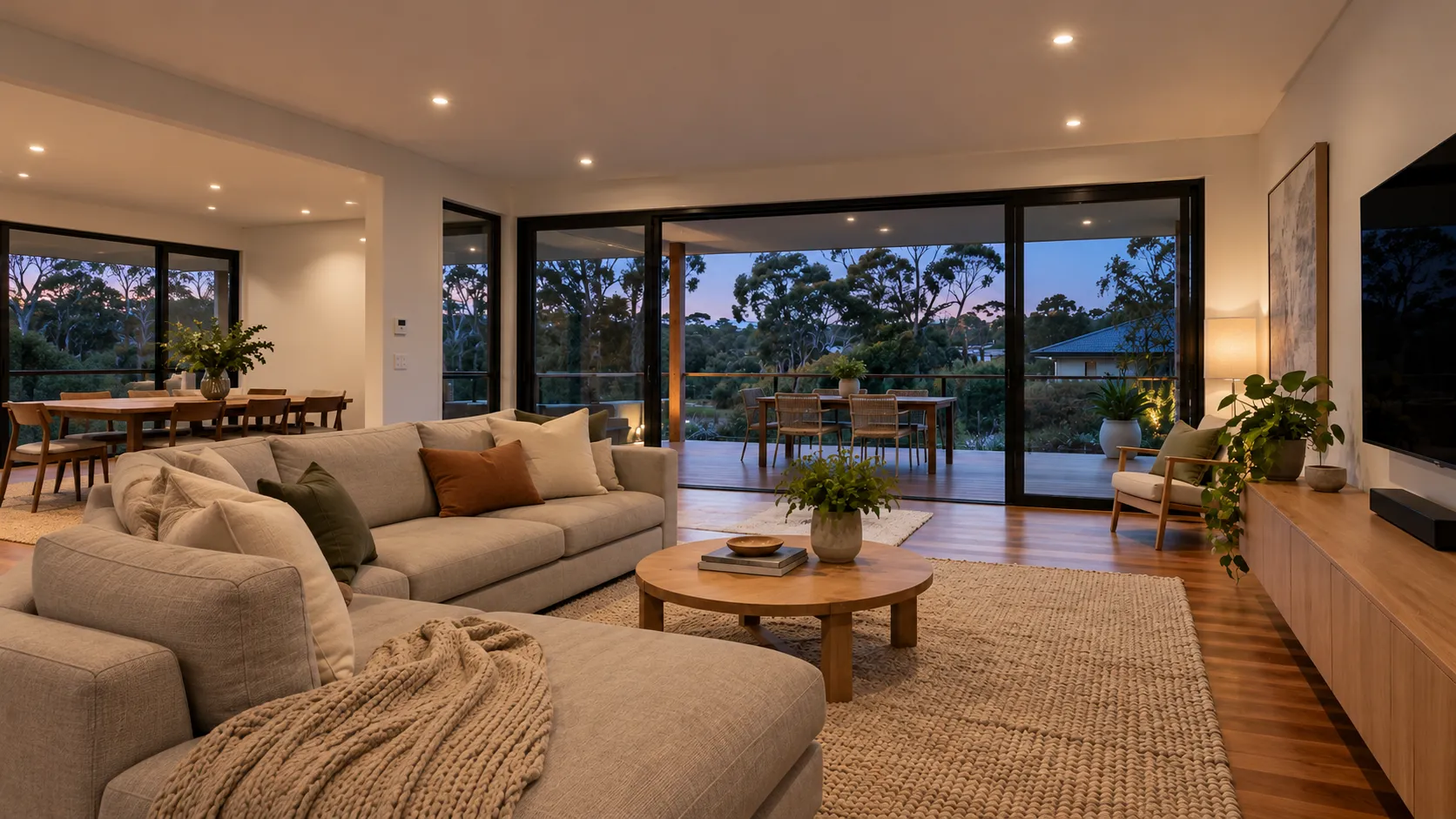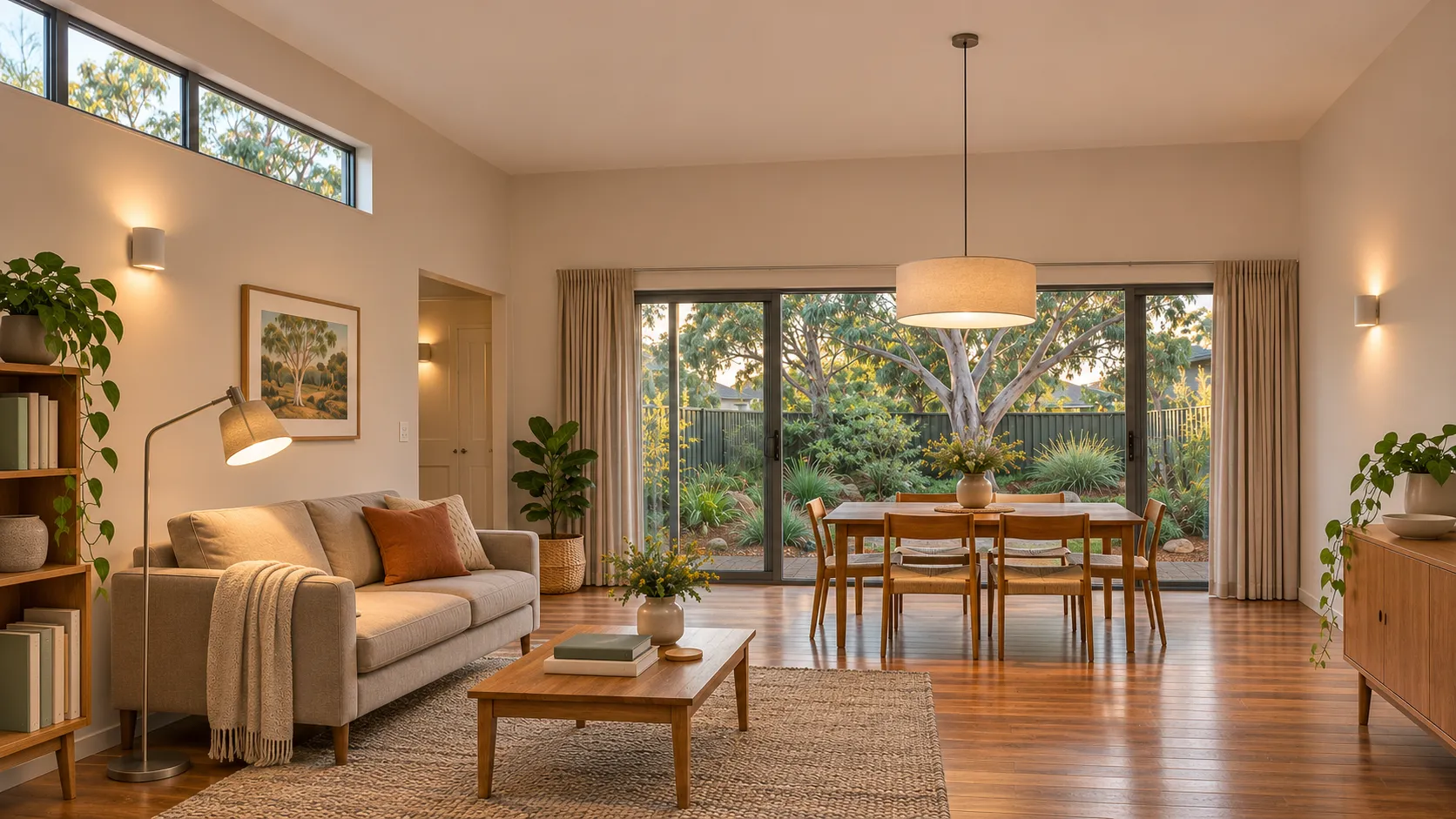
A light fitting can look perfectly placed from the floor yet be awkward to reach when it needs cleaning, repair or replacement. If your home has a high ceiling, a stair void or a large open living area, the practical question is not just whether a fitting suits the space. It is how well it illuminates the room and what happens when someone needs to access it.
Before choosing high-ceiling lighting for your home in Central Coast, consider maintenance access, light distribution, replaceable components and if every useful light source needs to sit overhead. Hudson Electrical can assess these practical considerations before installation, so your lighting choices account for everyday comfort and future servicing.
Lighting maintenance access should be part of the design conversation before a fitting is ordered. Two lights at the same ceiling height can involve very different servicing arrangements because of what sits beneath them.
The aim is not to work out how you could reach a light yourself. It is to establish how a professional could safely inspect, repair or replace it and whether that access would disrupt the room each time.
A clear floor beneath a fitting gives an electrician more options than a narrow stairwell or an area occupied by permanent joinery. Sloping ceilings, beams and restricted entry into the room can also affect the access equipment a professional may need.
A light over a stair void deserves particular attention. The space directly beneath it may offer no continuous, level working area. Even a modest repair can involve more planning than the same repair above an unobstructed living room floor. Moving the fitting slightly may help in some layouts, but that decision must account for lighting performance and safe professional access.
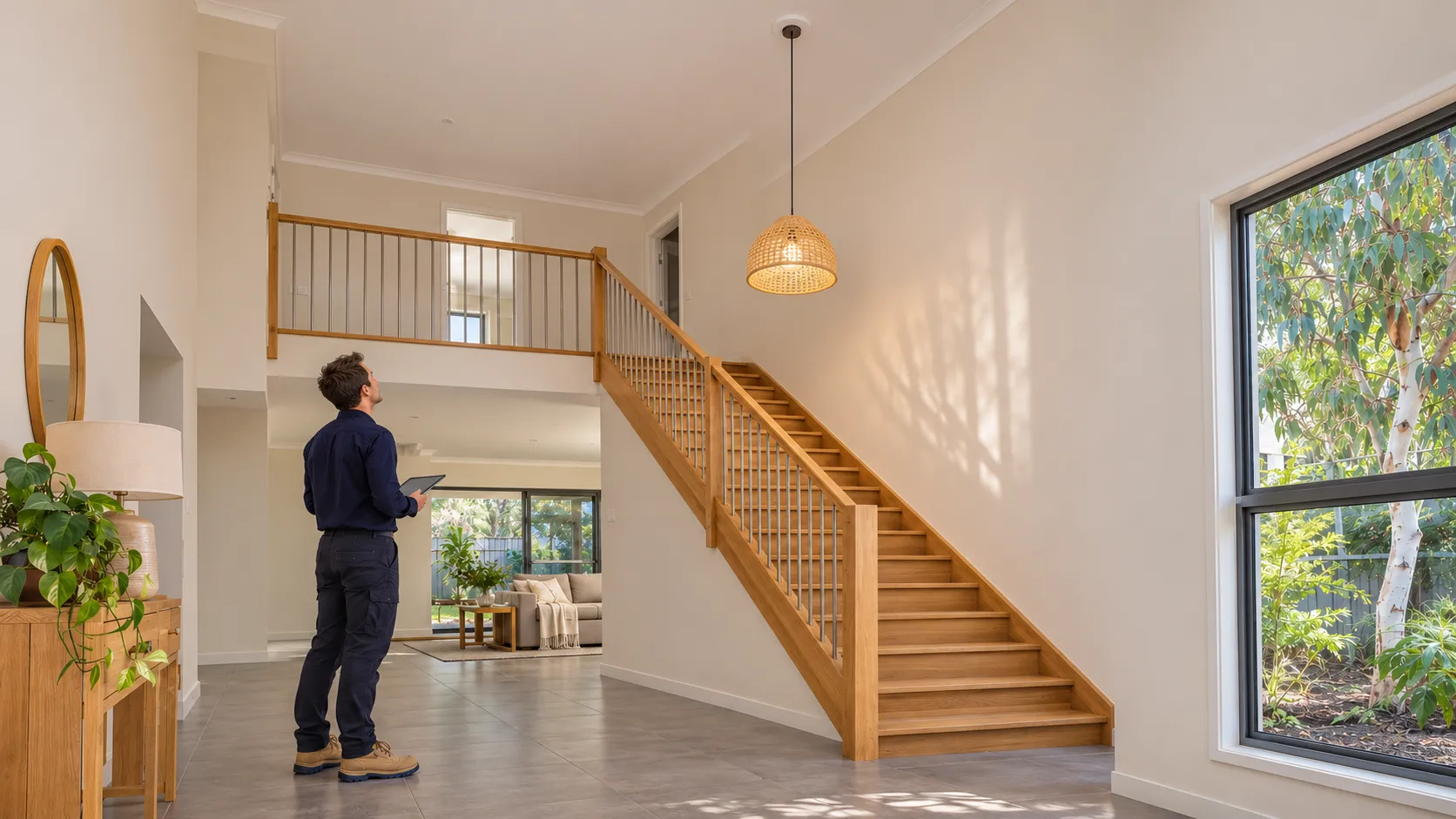
Depending on the ceiling height and surrounding conditions, servicing may require an appropriately rated ladder, an elevated work platform or other specialist access equipment. The available floor space, surface stability and proximity to stairs or other obstacles will influence what is suitable. This can also affect the time and cost involved in future maintenance.
SafeWork NSW’s guidance on working at heights explains why safe access and suitable fall prevention measures need to be considered before servicing high-level fittings.
When comparing local suppliers through a search such as electrician in Central Coast, ask them to assess the proposed position rather than simply quote from the ceiling height. Experts can be included in that discussion before you commit to a location or fitting.
Ask what access arrangements the electrician expects for routine servicing and whether any components can be maintained from another accessible location. A useful answer should relate to your actual room, not just the dimensions listed on a product sheet.
Think beyond the room as it looks on installation day. A light may initially sit over empty floor space, only for a dining table, large lounge or built-in cabinet to occupy that area later. Freestanding furniture may be movable, but moving it still takes time and can expose delicate flooring or nearby finishes to disruption.
Fixed furniture is a stronger constraint. A pendant centred over a kitchen island might suit the room visually, yet its position must also allow for future cleaning and electrical work. Do not assume that the surface below it provides suitable access.
Share your intended furniture layout with the electrician, including any planned joinery. Ask whether servicing would require furniture removal, specialist access equipment or protection for surrounding surfaces. For existing lights, photographs can explain the layout, although an on-site assessment may still be needed.
Cleaning access also deserves attention. Open pendants can collect dust and insects, while upward-facing shades may accumulate debris over time. Crystal fittings and designs with multiple decorative pieces can require more detailed cleaning than simpler fixtures. Consider whether shades can be removed easily and whether their materials can withstand regular cleaning without damage.
The fitting you choose determines more than how the room looks. It also influences which parts can be replaced, where those parts sit and whether a fault means servicing one component or changing the whole fitting.
Neither replaceable lamps nor integrated LED fittings are automatically the better option for a high ceiling. A better comparison considers how easily each fitting can be maintained in its intended location.
A fitting with replaceable lamps allows the light source to be changed separately from the fitting itself. That can be helpful if a compatible replacement remains readily available. However, a replaceable lamp is still difficult to reach if it sits several metres above a stairwell or behind a shade that must be removed first.
Check how the fitting is constructed. Some shades provide straightforward access to the lamp, while others involve several clips, fasteners or fragile decorative pieces. Multiple lamps can also mean several individual items that may need attention at different times. Choosing a familiar lamp type does not remove the access problem created by the fitting's position.
Integrated LED fittings combine the light source with the fitting more closely. Depending on the design, an electrician may be able to replace a light module or another component. In other products, replacement of the complete fitting may be the practical option. Integrated LED designs vary in how easily their components can be serviced or replaced.
Before buying, ask whether the light source is serviceable, who can supply replacement parts and what would need to be removed during a repair. Keep the product details and installation paperwork so a future electrician can identify the fitting without relying solely on an inspection at ceiling height.
Many LED fittings use a driver to supply the electrical conditions their light source requires. Depending on the product, that driver may be housed inside the fitting or located separately. Its position can make a substantial difference to future servicing.
A separately located driver may reduce the need to reach the visible fitting for some repairs, but only if the driver itself is safely accessible. Ask your electrician whether the proposed arrangement allows suitable access while meeting the product's installation requirements. A driver concealed behind a finished surface is not necessarily a convenient maintenance solution.
Component compatibility matters too. A part that looks similar is not automatically suitable, and not every lighting fault originates in the lamp or driver. This overview of common electrical issues and professional assessment explains why diagnosis matters before replacement work is planned.
For a shortlisted fitting, request information about replacement drivers, light modules, shades and mounting parts. Ask whether an equivalent component could be fitted later or whether its construction depends on a product-specific part that may become harder to source.
A high ceiling does not require every light source to be installed at ceiling level. Distributing light closer to where you use it can reduce your reliance on hard-to-reach fittings while keeping the room practical.
A more effective approach is to assign each light source a specific purpose. Ambient lighting provides general illumination, task lighting supports activities like reading or cooking, and accent lighting highlights architectural features or decorative details. Combining these layers can create a more balanced space without relying on one large overhead fitting to do everything.
A pendant brings the light source below the ceiling, which may make the fitting easier for a professional to service. However, a longer suspension does not automatically solve access. The ceiling connection remains high, and some repairs may still require access to that point.
Pendant light placement should reflect how you move through the room. A lower fitting above a table may sit outside normal walking routes, whereas the same height in an open circulation area could become an obstruction. Consider if furniture is likely to move and if the room needs to accommodate different activities later.
A fitting's size and construction can be just as important as its suspension height when planning future maintenance. A large shade may be awkward to handle even when it is relatively low. Multiple glass pieces or exposed decorative elements can increase cleaning demands. Ask how the shade is removed, whether it can be cleaned separately and what access remains necessary for electrical components.
Lighting performance also matters. The pendant’s brightness, beam angle and position will influence how effectively it illuminates the area below. A fitting with a narrow beam may create a concentrated pool of light rather than provide even illumination across a dining or living area. Consider the room's dimensions and intended use when comparing options.
Bring the room dimensions and intended furniture positions into the selection process. This article on choosing lighting that suits your home offers broader selection considerations, while your electrician can assess the practical implications of the specific pendant and location.
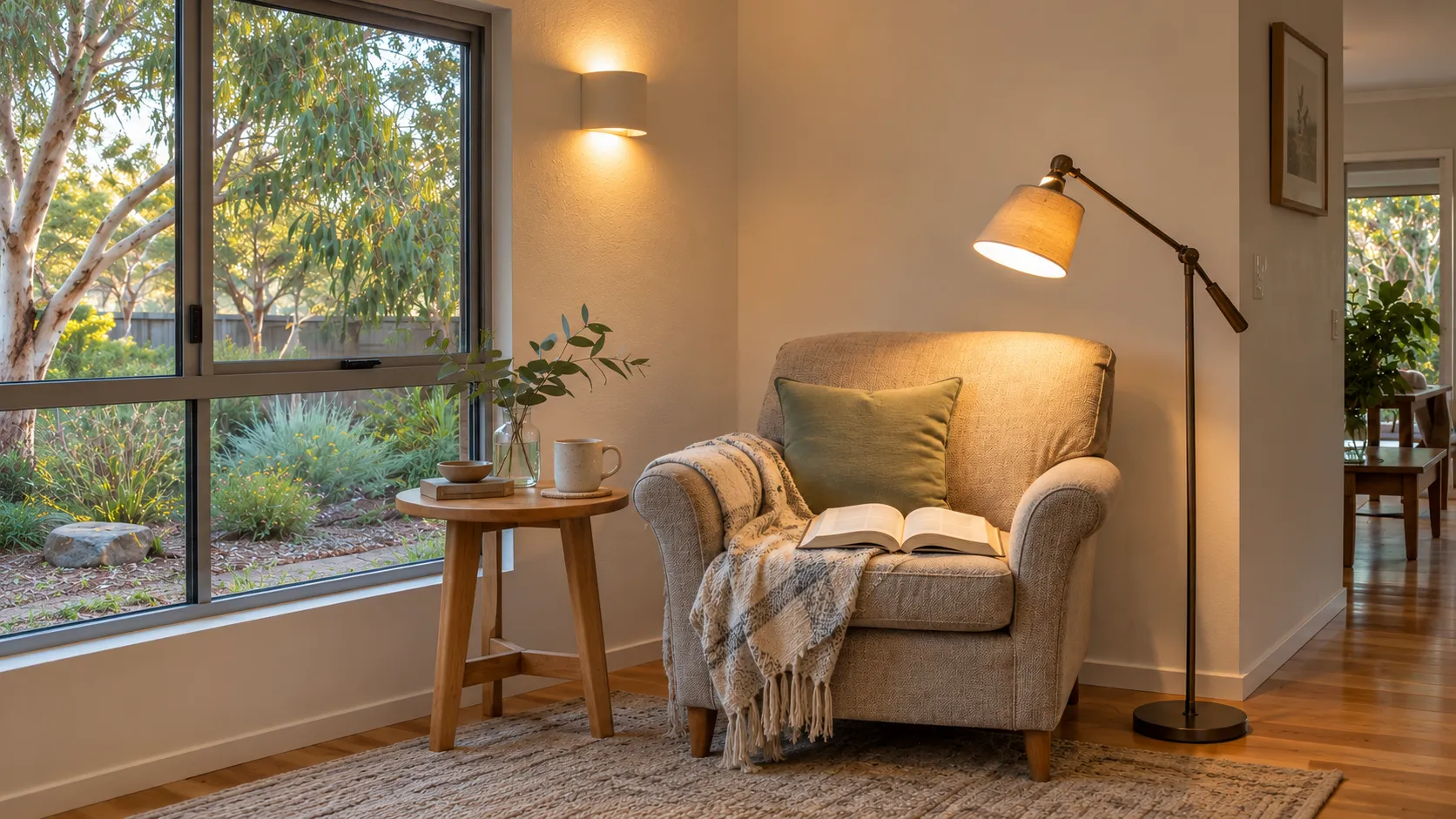
Wall lights can provide useful illumination below the ceiling, provided their position suits the room and leaves their serviceable parts accessible. They should not create awkward projections into walkways or be hidden behind furniture that makes cleaning and servicing difficult.
Consider where the light actually lands. A wall fitting that illuminates only a small patch of wall may not replace the useful light you need across a seating area. Its brightness, beam direction and mounting position all influence how much of the room it illuminates.
Portable task lighting can cover activities such as reading without adding another high-level light point. Its placement still needs to avoid trailing cords across circulation areas, and suitable existing power access is an important part of the plan.
These lower lighting options can work alongside overhead fittings rather than replace them entirely. For example, ceiling illumination can provide ambient light, wall fittings can soften darker areas and a floor or table lamp can provide focused light for reading. This layered arrangement helps distribute illumination throughout the room while reducing dependence on a single high-level source.
Any new fixed wall lighting, pendant installation or associated wiring must be handled by a licensed electrician. Ask the quote to identify fitting locations, component access and any installation assumptions so you can compare proposals on maintenance practicality as well as appearance.
Choosing lighting for a high ceiling involves more than finding a fitting that looks proportional to the room. Access requirements, cleaning demands, component availability and light distribution can all influence how well the installation performs over time.
Before deciding, consider how the room will be used, what equipment may be needed to reach each fitting and whether a combination of overhead, wall and task lighting would provide better coverage. Hudson Electrical can help assess these details and plan lighting installations that balance appearance, everyday comfort and future maintenance.