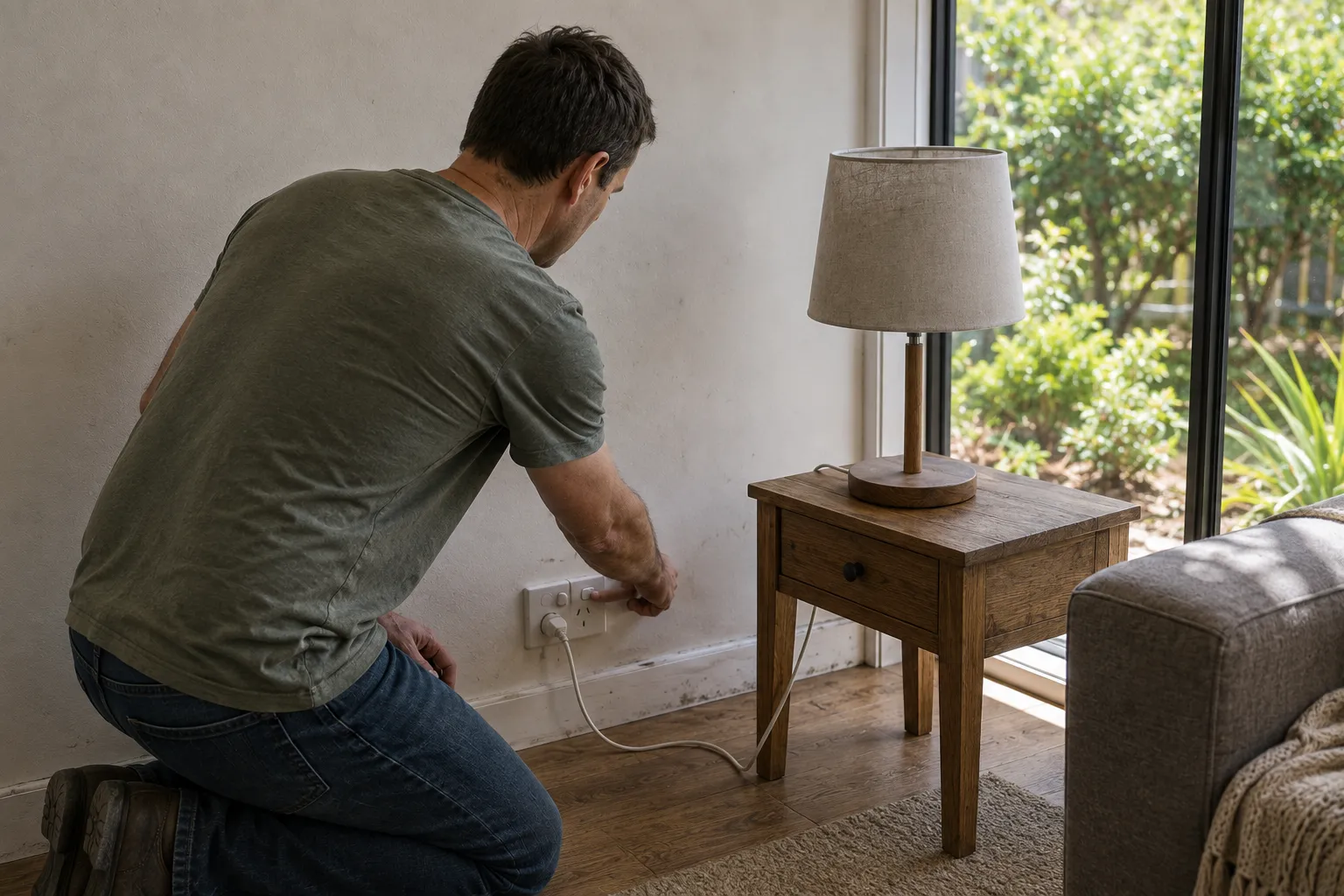
A bedroom can have plenty of power points and still leave someone reaching behind a bedhead to charge a phone. The problem is often not the number of outlets, but how their positions line up with furniture, plugs and everyday habits. A socket hidden behind an upholstered bedhead might look tidy on a floor plan but become almost impossible to use once the bed is in place.
For homeowners planning bedroom changes, the best starting point is how each side of the bed will be used. Planning helps determine suitable outlet positions, allows enough clearance for plugs and compares built-in charging ports with ordinary sockets. These details also give electricians a clearer brief before any installation or relocation work begins.
Useful bedside power points are positioned around the furniture and daily routines rather than at a standard height chosen in isolation. The aim is to make sockets accessible without moving heavy furniture, stretching cables across walkways or interfering with drawers.
For broader guidance on planning power outlet locations, the Australian Government’s YourHome guide recommends developing an electrical layout that reduces reliance on power boards and cords across walkways.
Before discussing locations, identify which devices will stay plugged in and which will be connected occasionally. A bedside lamp has different access requirements from a phone charger that needs to be unplugged and taken elsewhere.
Measure the full width of the bedhead, not just the mattress. Some bedheads extend well beyond the bed frame, covering the wall where an outlet besides the mattress might seem practical. Record the width, height and depth of each bedside table, including any raised back edge or overhanging surface.
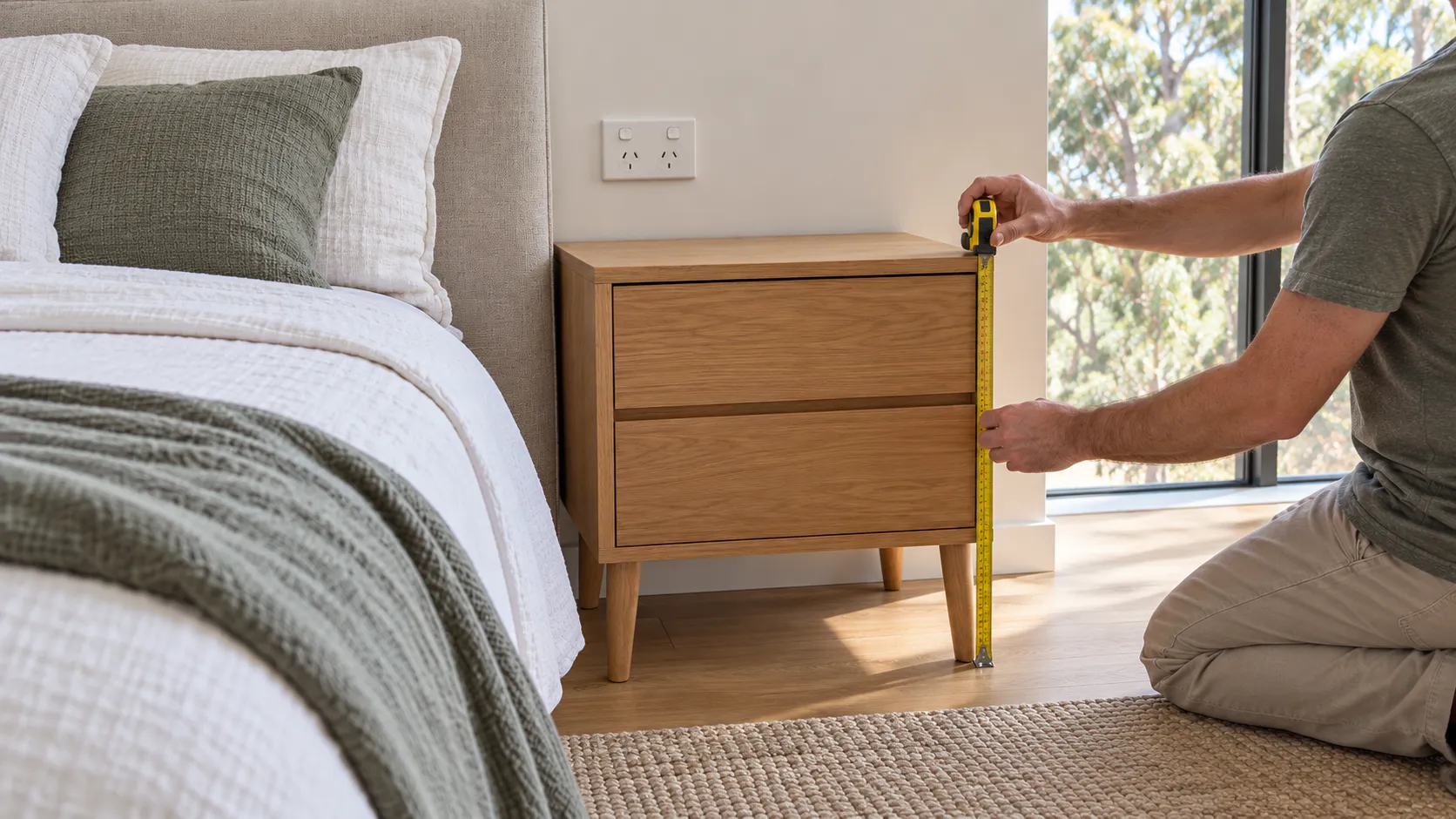
Drawer movement also matters. An outlet behind a bedside table may leave a cord crossing the path of a drawer, while one besides the table may become difficult to reach if the furniture sits close to the bed. Note whether the table has an open shelf, solid back or drawers so the electrician can assess the available space.
There is a trade-off between concealment and accessibility. An outlet below tabletop level may keep plugs out of sight but make connections harder to reach. A position above the table may be more convenient but also more visible. The best location depends on the furniture, ease of access and preference for keeping cords out of view.
List the equipment intended for each side of the bed, including lamps, phone chargers, tablet chargers and adjustable bed connections. Count the devices that need power simultaneously rather than the total number of devices owned.
Consider where each cord will run. A lamp cord may follow the back of the bedside table, while a charging cable needs to reach the tabletop without stretching across the gap besides the mattress. Adjustable bed equipment may have specific connection and cable-clearance requirements, which should be checked against the manufacturer's instructions.
Photos of the bedroom and a simple furniture sketch can make the initial consultation more productive. When choosing an electrician in North Shore, homeowners should ask how the proposed outlet positions will accommodate their actual furniture and equipment.
Planning electrical work can also help homeowners prepare a clearer brief, including their current needs and any expected changes to the room.
If the bedhead may be replaced or the bed upgraded to a wider size, mention this before finalising the outlet layout. A position that clears the current furniture could end up hidden behind a future bedhead.
There is no need to plan for every possible arrangement. Instead, identify likely changes and discuss which outlet positions offer reasonable flexibility. Considering future furniture dimensions can help avoid unnecessary relocation work later. The questions covered in planning electrical work in your home can prepare you for a clearer brief, including what you want now and what may change later.
An accessible wall plate does not necessarily provide enough space to use it comfortably. The plug, adapter and cord all extend beyond the wall, specifically behind deep bedside tables or thick upholstered bedheads.
Socket access and electrical capacity are separate considerations. A better arrangement can reduce reliance on trailing leads and crowded power boards, but a licensed electrician still needs to assess the existing wiring and circuit suitability before recommending changes.
A compact lamp plug and a large charging adapter can fit differently in the same location. Some adapters project further from the wall or spread sideways across neighbouring sockets, making a multi-socket outlet less practical than it appears on a floor plan.
Provide the experts with photographs or dimensions of the chargers intended for regular use. This helps when assessing socket spacing and wall placement if several devices need to remain connected at once.
Hand clearance matters as well. If disconnecting a charger requires reaching into a narrow gap behind the bed, the arrangement may remain inconvenient even when the plug technically fits. Everyday access should not depend on pulling the bedside table forward whenever a device needs to be unplugged.
A bedhead pushed tightly against the wall can press against a protruding plug. Deep furniture may also trap cords between its back edge and the wall, while moving drawers or adjustable bed components can catch cables routed through their path.
The aim is to provide enough clearance for plugs and cords without requiring furniture to sit at an awkward angle. Discuss the bedhead's shape, mounting arrangement and any movement of the bed with the electrician, as these details can affect which locations are practical.
Trailing leads and crowded power boards may indicate that the existing power point layout needs attention, but they do not automatically mean the entire home requires rewiring. If a plug or socket is damaged, discoloured or unusually warm, stop using the affected connection and arrange an electrical assessment. If there is an immediate electrical hazard, keep clear and seek professional assistance rather than attempting to disconnect the equipment.
Adding power points creates more connection options, not necessarily more available electrical capacity. The electrician needs to assess the intended equipment, existing circuit arrangement and electrical protection before deciding how the work should proceed.
Wall construction and cable access can also influence the installation options. A location that looks ideal on a furniture sketch may be difficult to wire, so discuss alternatives before finalising the layout.
In an older home, the condition of the wiring or switchboard may warrant further assessment. Information about electrical considerations in older homes prepares relevant questions, but the condition of an individual installation needs to be evaluated by professionals.
Built-in USB charging ports can reduce the number of plug-in adapters needed at the bedside, while ordinary power points offer greater flexibility as devices and chargers change. The better choice depends on the equipment being charged, the required charging speed and the other appliances that need power.
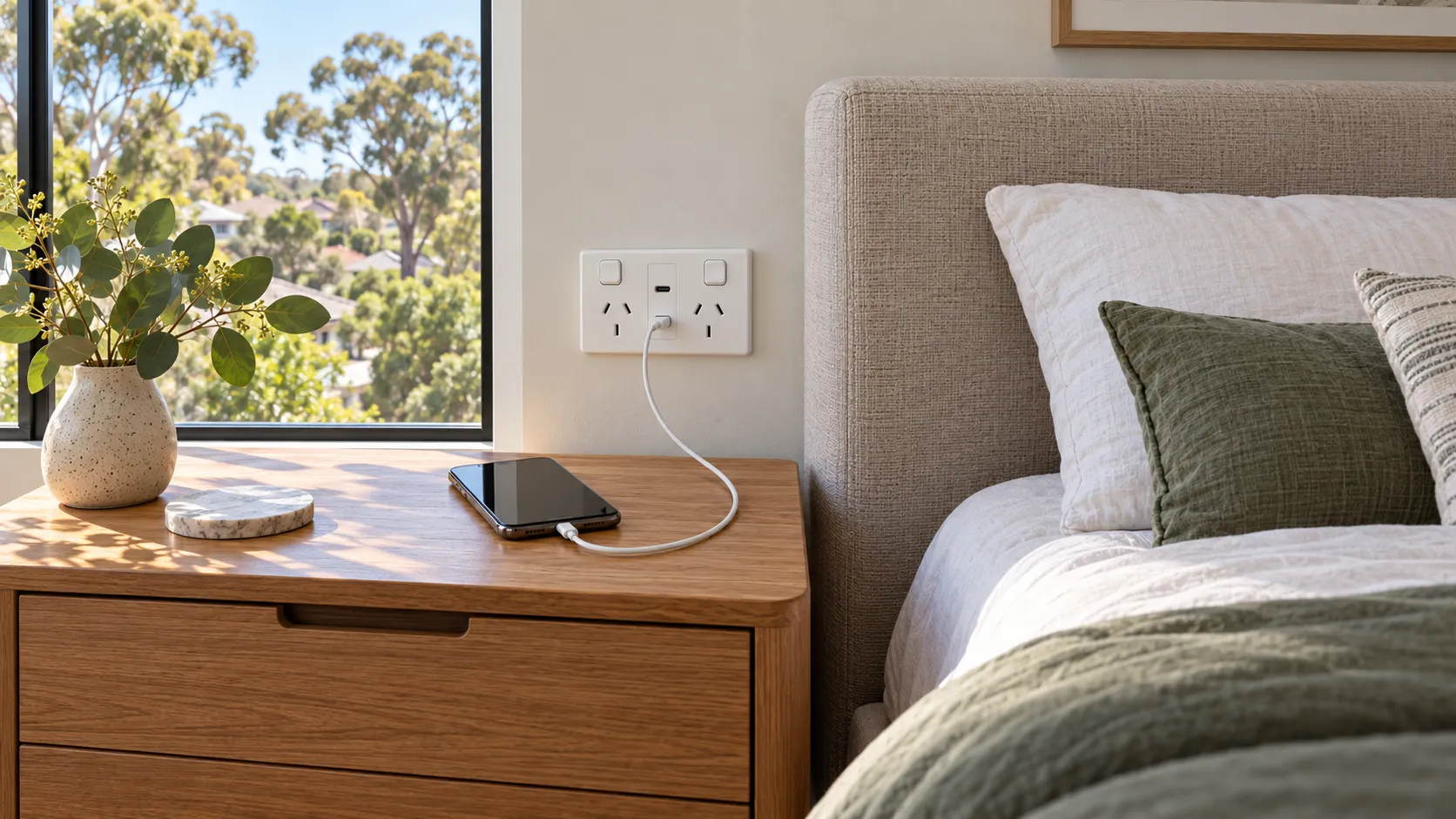
Importantly, USB charging ports do not replace ordinary sockets for mains-powered equipment such as bedside lamps or compatible adjustable bed systems. Comparing charging specifications alongside appearance helps ensure the final arrangement suits everyday use.
When considering USB charging outlets, check the connector type, supported output and compatibility with the intended devices. Charging speed depends on the outlet, cable and device working together. A port that looks suitable may charge a phone or tablet more slowly than its original charger.
Ask whether the stated output applies to each port individually or is shared when several devices are connected. Shared output may be perfectly adequate for devices charging overnight, but it could be less convenient when several devices need a quick charge.
Cable compatibility also matters. A cable that fits the connectors does not necessarily support the charging performance expected. Providing the electrician with the specifications of existing devices and chargers can help determine whether a built-in option is appropriate.
Consider future needs as well. Devices and charging standards eventually change, so a solution that works well today may not suit every future device. Keeping some flexibility in the overall power point arrangement can help accommodate those changes.
Ordinary sockets allow homeowners to use compatible plug-in chargers and replace those chargers independently when their requirements change. Chargers can also be taken elsewhere when needed. The trade-off is the extra adapter space and the possibility of a more crowded bedside arrangement.
Integrated USB ports can reduce clutter, but their charging hardware forms part of the installed outlet. If the charging function becomes unsuitable or stops working, electricians should assess the outlet and determine whether repair or replacement is required.
Retaining ordinary sockets for equipment that cannot use USB charging is essential. The goal is to reduce unnecessary adapters without limiting the ability to power lamps, bed equipment and other bedside appliances.
There is no need to use the same charging arrangement on both sides of the bed. Built-in USB charging may suit the side where a phone is charged overnight, while ordinary sockets may be more practical on the other side for lamps, interchangeable chargers or other equipment.
Discuss each side separately, considering the number of simultaneous connections, adapter sizes and cable routes. Matching wall plates can still create a consistent appearance without requiring both sides to have identical charging functions.
Homeowners can share their furniture measurements, equipment list and preferred charging arrangement with Hudson Electrical (Level Electrical). A licensed electrician can assess wall access, existing wiring and circuit capacity before recommending suitable positions. This helps ensure the finished layout balances convenience, flexibility and electrical safety.