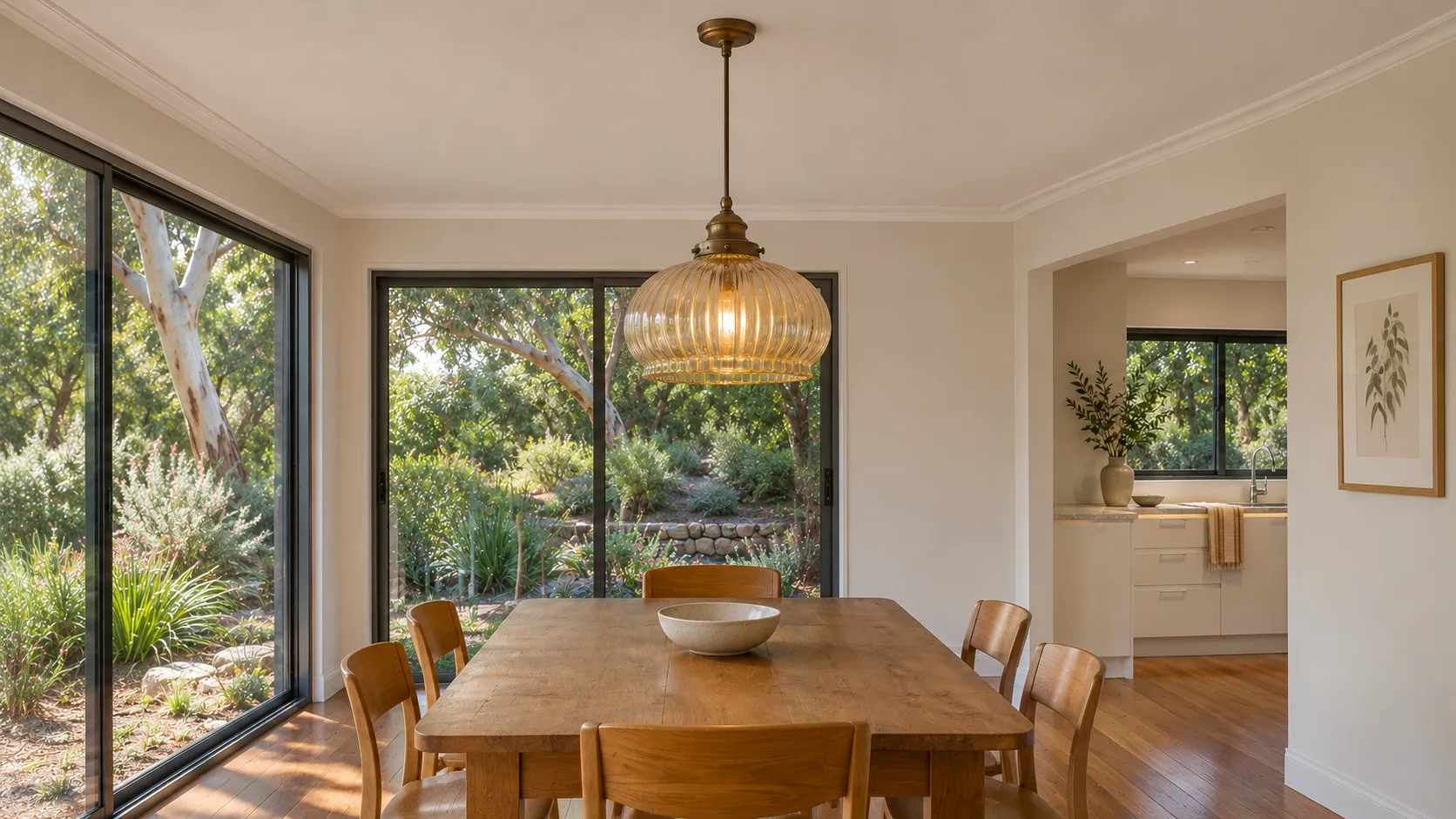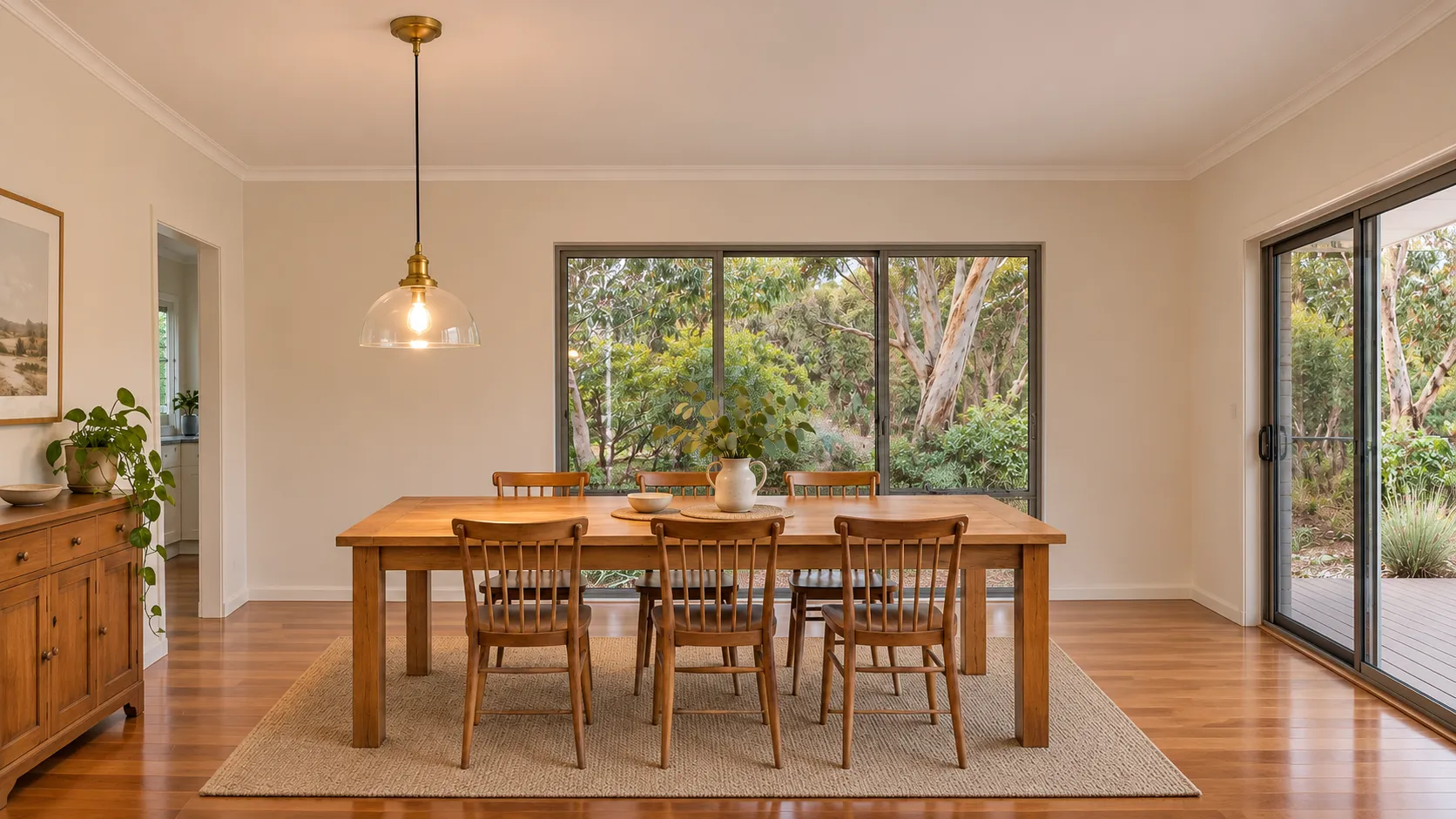
Moving your dining table can make the room work better while leaving the pendant light awkwardly behind. A fitting that once framed the table may now hang above a chair, interrupt a walkway or cast light besides the meals rather than over them. Hudson Electrical can help Northern Beaches homeowners check their options, whether that means relocating the electrical connection or choosing a fitting that works with the existing position.
Before committing to pendant light relocation, understand how the furniture layout, ceiling construction and fitting design affect the work. Knowing how to establish the new position, what a licensed electrician needs to assess and when an offset fitting could be suitable can help you choose a practical solution for your home.
Settle the dining layout before deciding where the pendant should go. The most useful reference point is usually the table in its everyday position, not the centre of the ceiling or the location of the existing light.
Good dining room lighting also needs to work when people are seated, walking past or extending the table for visitors. Looking at these situations together helps avoid paying to move a fitting to a position that only suits an empty room.
Place the table where it will be used most often, with chairs arranged as they would be during a meal. Check whether people can pull their chairs out comfortably and someone can pass behind an occupied seat. A table that looks balanced against a wall may need to shift once these movements are considered.
A simple way to visualise the proposed pendant position is to mark the centre of the tabletop with masking tape or use a temporary reference point above it. This gives you a clearer idea of where the fitting should hang before discussing the installation with an electrician.
Look at the layout from adjoining spaces as well. If moving the table improves access but puts the pendant directly in an important sightline, the fitting's size or suspension height may need reconsidering. A large shade can feel quite different above the table than it does besides it.
An extendable table adds another decision. If it is used closed most days, that everyday arrangement will usually deserve priority. If it stays extended for long periods, judge the light against that configuration instead. Some tables extend evenly from the centre, while others change their centre point, so check the actual furniture rather than assuming the pendant will remain aligned.
A pendant over a dining table reads as part of that furniture setting. It does not necessarily need to sit at the geometric centre of the room, particularly where the dining area shares space with another living zone.
Consider the fitting's shape as well as its centre point. A compact pendant may suit a small table, while a longer fitting can visually follow a rectangular tabletop. The shade's light distribution and direction also matter. A fitting can appear centred yet leave the ends of the table noticeably darker.
Think about how the light will feel during everyday use. Direct lighting can provide focused illumination for dining and other activities, while diffused lighting creates a softer effect across the space. The fitting should illuminate the tabletop without creating uncomfortable glare for people seated around it.
There is no single suspension height that works for every pendant. The electrician should consider the manufacturer's requirements, ceiling height, fitting dimensions and clearance above the tabletop. People should also be able to see one another comfortably without a shade dominating the view.
Before installation, discuss the proposed position and drop using the table's final location. If you are reconsidering the fixture, these considerations for choosing lighting that suits your home can help you separate a placement problem from a fitting that no longer suits the space.

The distance between the old and new positions is only one part of the job. A short move across a finished ceiling can involve more work than a longer move where the electrician has suitable access above it.
A licensed electrician must assess the cable route, existing installation and how the pendant will be supported before recommending an approach. Wiring alterations and installation should remain with that professional, even if the visible change appears minor.
An accessible roof cavity may allow the electrician to inspect the area above the proposed position and plan the work with fewer disruptions to the ceiling finish. Access still depends on the available space, insulation, framing and other obstacles. Having a roof space does not automatically make every part of it reachable.
Where another floor sits above the dining area, or the ceiling has little usable space above it, the route may be less straightforward. The electrician may need to discuss whether access openings are necessary and where they could affect the finished surface.
This is why a request to move a pendant half a metre does not establish the full scope of work. Two nearby points can sit on opposite sides of framing or other obstructions. The practical route for the wiring may not follow the shortest visible line.
An electrician Northern Beaches homeowners can call on should assess both the proposed location and the condition of the existing connection. The available cable, its condition and the suitability of the cable route all influence what work is required.
The pendant also needs appropriate support for its weight and mounting arrangement. A lightweight shade and a substantial decorative fitting place different demands on the installation. The electrical connection and mechanical support are separate considerations, and neither should be assumed suitable simply because a light was installed nearby.
If the assessment identifies concerns with the existing wiring, those may need attention before relocation proceeds. Background information on how wiring condition affects electrical safety can explain why an electrician may recommend work beyond changing the pendant's position.
Once the electrical work is complete, ask your electrician for a copy of the Certificate of Compliance for Electrical Work, which confirms the work has been tested and complies with the relevant requirements.
Relocating the connection can leave an opening, fixing marks or a visible outline where the original ceiling canopy sat. The electrical work does not necessarily include restoring that surface to a paint-ready finish.
Clarify who will handle any patching and painting and how that work fits around the installation. Even a neatly repaired opening may remain noticeable if the surrounding paint has aged or the ceiling has a textured finish.
Before agreeing to the work, follow the NSW Government’s guidance on getting a clear written quote so you can confirm whether ceiling patching, painting and any additional access work are included.
If the new position requires ceiling access, discuss how those openings will be closed and whether additional tradespeople will be needed. Knowing what is included helps homeowners compare suppliers based on the finished scope rather than the electrical work alone.
Keeping the existing electrical point may be possible if a purpose-designed fitting can position the light over the table. This can reduce disruption to the ceiling, but it is a design option for an electrician to assess rather than a guaranteed shortcut.
The vital distinction is between the ceiling connection and the position of the shade or light source. Some fittings deliberately separate those locations. Others are designed to hang directly beneath their mounting point and cannot safely be adapted to behave differently.
An offset pendant uses a designed arm or suspension arrangement to carry the light away from the electrical connection. Depending on the product, this could bring the shade closer to the table's centre while retaining the original connection point.
The distance matters. A modest offset may suit one fitting, while a table moved well across the room may sit beyond its intended reach. The offset’s direction also needs to work with the fitting's design and available mounting positions.
Retaining the connection does not necessarily mean avoiding all ceiling work. Some offset designs need an additional supported suspension point, which can introduce another fixing and leave marks if the layout changes later. An electrician should confirm what the proposed fitting requires rather than treating its flexible appearance as proof that it can hang anywhere.
There is also a visual trade-off. An exposed cord or projecting arm becomes part of the room's composition. Some homeowners may prefer that deliberate design feature, while others may find that a pendant hanging directly above the table gives the cleaner result.
Unlike offset fittings, which are designed to position the light away from its ceiling connection, adjustable pendants can offer different types of movement depending on their construction.
Some allow the suspension height to change without providing any sideways movement. Others have adjustable arms or suspension systems that allow the light to move horizontally within a limited range. Checking the product's actual adjustment capabilities is important before assuming it will solve the alignment problem.
Any permitted adjustment still needs to preserve suitable clearance and support. A shade moved sideways might end up beyond the tabletop, where someone could walk beneath it. A heavier fitting may require support that limits where it can be positioned, regardless of how flexible its suspension looks.
The lighting performance should also be considered. Moving the shade away from its original connection can change how light falls across the table. Check whether the fitting can still provide sufficient illumination without creating glare or leaving parts of the dining area too dark.
Compare the options against how settled the furniture layout is. If the table now has a clear long-term position, full relocation may provide a more direct arrangement. If you expect modest changes and like the appearance of an offset or adjustable design, retaining the connection may be worth exploring.
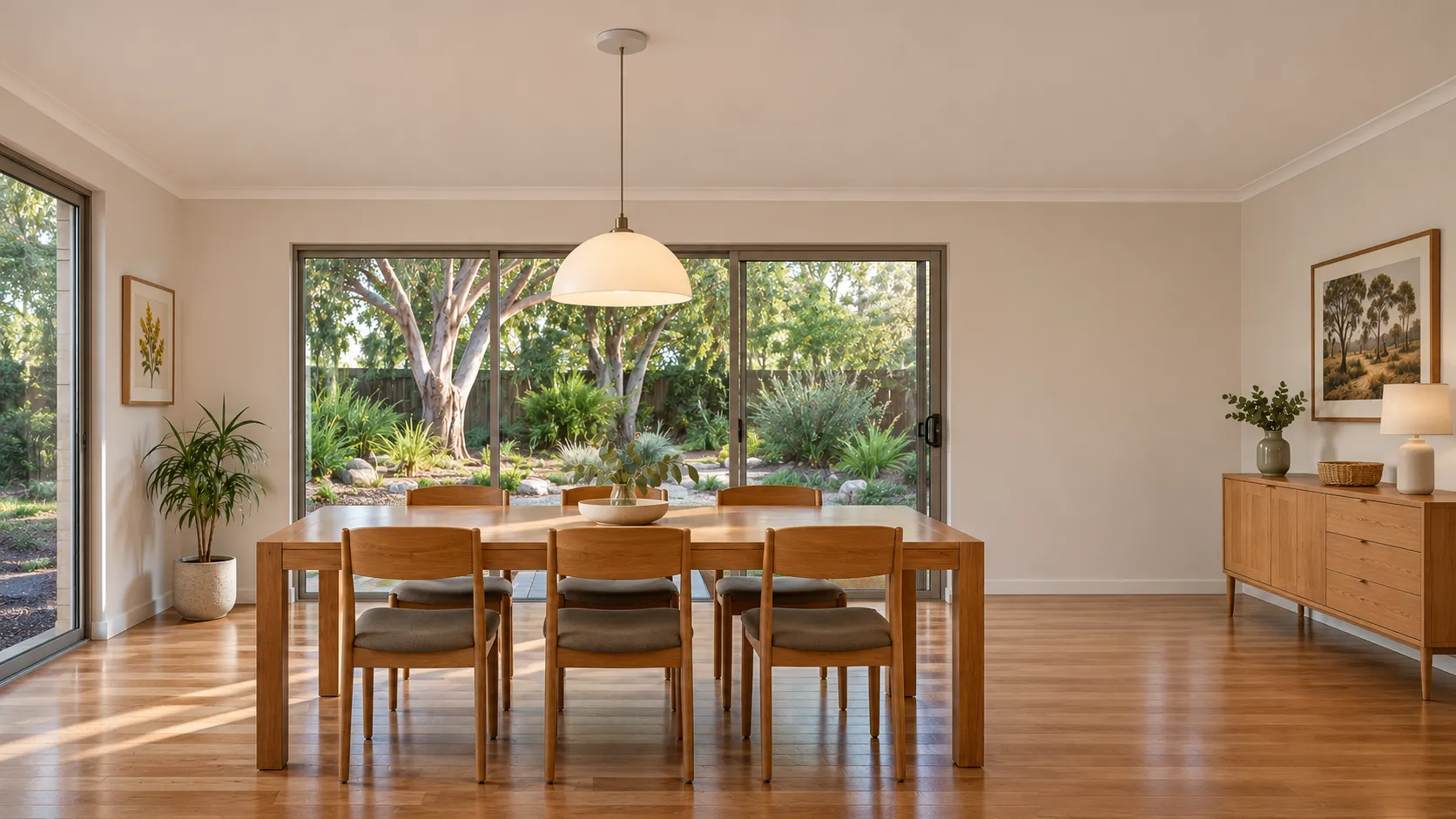
A pendant light that no longer aligns with your dining table does not always require the same solution. The best approach depends on the furniture layout, ceiling access, wiring condition and whether a suitable offset or adjustable fitting can achieve the desired result.
Hudson Electrical can assess pendant light relocation options and determine what is practical for their ceiling and chosen fitting. Having a licensed electrician evaluate the proposed position before work begins helps ensure the finished installation provides suitable support, safe electrical connections and comfortable lighting for everyday dining.